The Edina Communications Meta NationBuilder Enrichment Tool
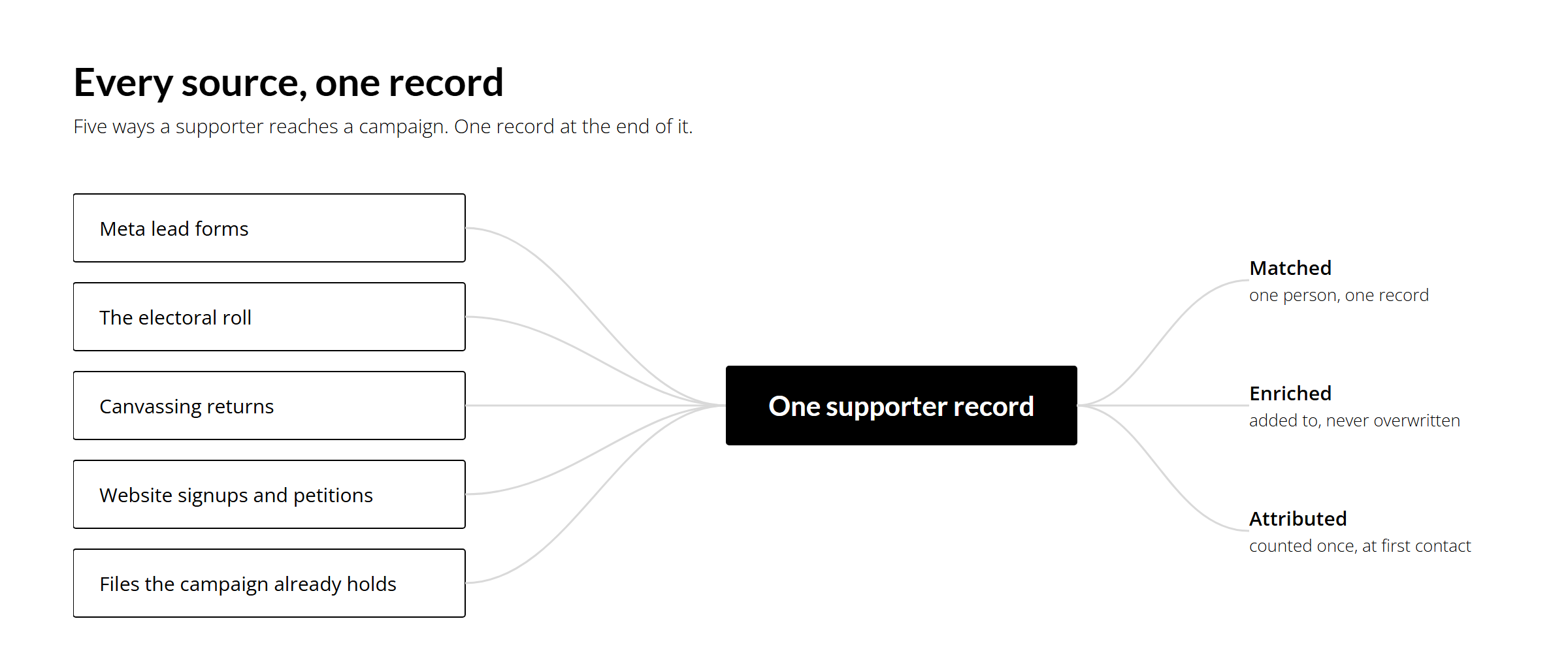
The Edina Communications Meta NationBuilder Enrichment Tool brings a campaign's data together in NationBuilder and holds it in one shape. Meta lead advertising, the electoral roll, canvassing returns and website signups all land on the same supporter record. The tool matches each one, fills it out and records where it came from. That is what makes hyper-local campaigning practical at volume.
What is the Edina Communications Meta NationBuilder Enrichment Tool?
The tool is a data and attribution platform for political campaigns running on NationBuilder. Meta advertising sits at its centre. It takes in Facebook and Instagram lead forms, writes them into NationBuilder, pulls the advertising performance data and reports what each result cost. Around that, it joins the rest of a campaign's data to the same records: the electoral roll, canvassing returns and whatever files the campaign already holds.
What data does it bring together?
- Meta lead forms from Facebook and Instagram, arriving as people submit them.
- The electoral roll, which gives a campaign the names and addresses it starts from.
- Canvassing returns, including the answers volunteers record at the door.
- Website signups, petition signatures and survey responses.
- Membership lists, purchased data and any other files the campaign holds, in whatever format they arrive.
How does it know which person is which?
This is the part that decides whether the rest works. A campaign built from the electoral roll holds names and addresses, and almost no email addresses. Match a new record on email alone and you create a duplicate nearly every time. So the tool matches in tiers, on the identifiers people actually supply, and name and postcode do most of the work. It applies the same rules to every source. One person ends up with one record, whether they came from an advertisement, a doorstep or a petition.
What does voter enrichment add?
The tool adds to a matched record. It never replaces one. It stores demographic detail against the person, writes further contact details into NationBuilder wherever a field is empty, and appends the geography a postcode implies. It then applies targeting tags that say where the person sits in the campaign plan. Rules derive those tags, so when the underlying data changes a person moves between groups on their own, with nobody editing records by hand.
How does it combine canvassing with everything else?
Canvassing produces the most valuable data a campaign has. It is also the most awkward to keep. Doorstep answers land on the same record the advertising and the website write to, so a voter intention captured at the door sits beside the advertisement that first reached them. The tool keeps the latest answer and the history behind it.
How does it enable hyper-local campaigning?
Hyper-local campaigning means running many narrow campaigns at once, each aimed at one ward, one town or one issue. You can only afford that if every source arrives already matched, already tagged and already attributed. The tool does that automatically, and it does it for every campaign in parallel. A team can therefore run twenty local campaigns for the effort a single national one would take, and read each of them separately.
What is true effect reporting?
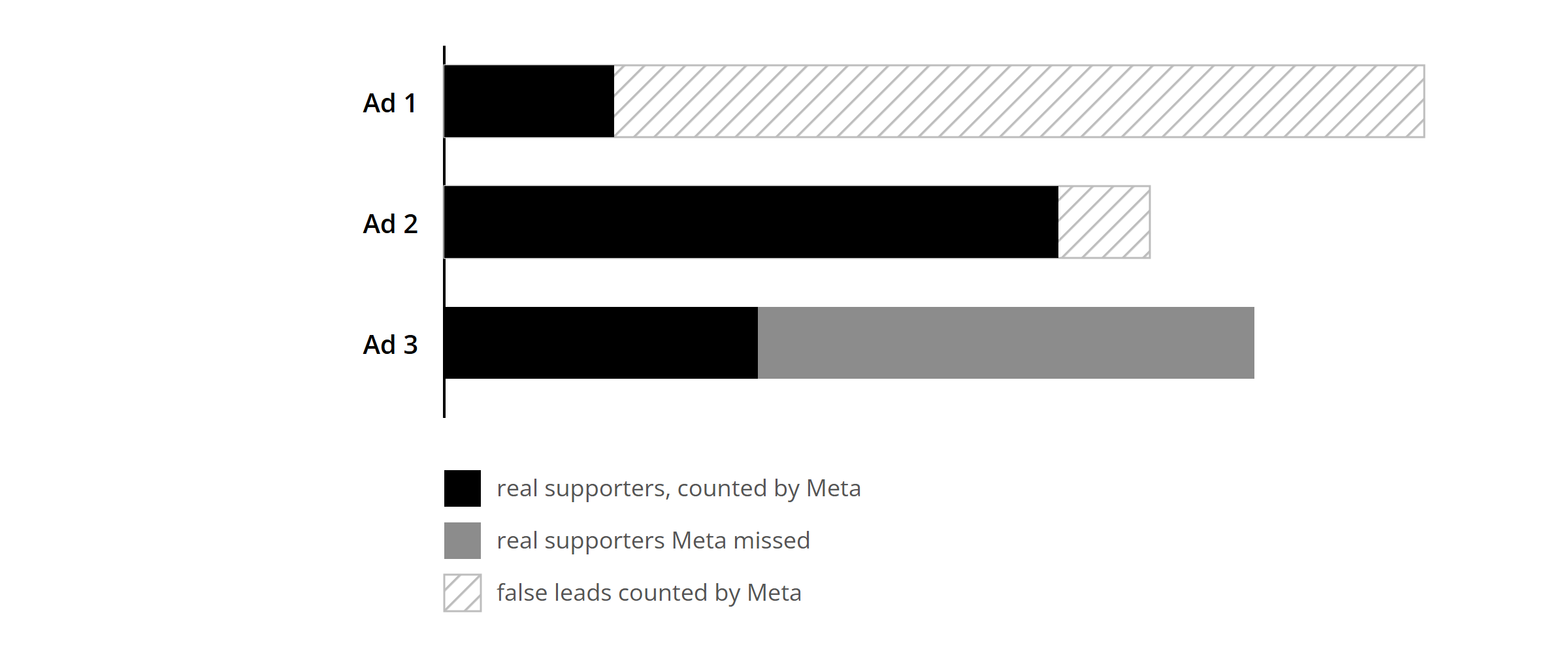
Advertising platforms count the same person more than once. Someone completes a lead form, then signs a petition, then answers a survey, and appears three times over. The cost per result reads better than it is. The tool counts each person once, at the point they first appeared, and credits the advertisement that genuinely reached them. A campaign can then see which advertisements worked, including those Meta under-reports.
Does it change data already held in NationBuilder?
The tool adds. It does not overwrite. NationBuilder remains the authority on every person it holds.
- It fills in an existing supporter record only where a field is empty.
- It never replaces a name, an address or a postcode already on the record.
- It adds tags and list memberships. It never strips them.
- It never opts anyone out of email, and it never reverses an opt-in.
- It logs every write to NationBuilder.
What does a campaign see?
Campaigns work from a dashboard laid out like Meta Ads Manager, so nobody has to explain it. The true cost figures sit beside the platform's own. Staff read it without training, and the numbers reconcile to the people held in NationBuilder.
Who is it for?
We use it on political campaigns, advocacy campaigns and membership organisations that keep their supporters in NationBuilder. It suits any campaign that combines paid advertising with a ground operation, and any campaign that cannot presently say which of its spending produced supporters.
Availability
The tool is not on general sale. It runs on our own campaigns. We will consider making it available to a small number of organisations where the fit is right, on terms that reflect what it does. If that might be you, write to us.
Talk to us
Tell us about your campaign and we will set out our approach.
Get in touch